
Industrial Welding Fume Extractor Systems
Welding operations generate airborne contaminants that put workers at risk and put facilities on OSHA's radar. According to OSHA, for fiscal year 2020, Respiratory Protection (29 CFR 1910.134) ranked #3 among the top 10 most frequently cited standards following worksite inspections. Welding fumes remain one of the most common contributors to those citations. The right industrial welding fume extractor solves this problem at the source, protecting your team, keeping your facility compliant, and improving the air quality that directly affects employee retention and recruitment.
The metalworking process produces hazardous air pollutants, including chromium, hexavalent chromium, lead, manganese, nickel, and zinc. Long-term exposure to these substances is linked to serious respiratory illness, neurological damage, and certain cancers. For facility managers and EHS teams in metal fabrication, automotive, aerospace, and general manufacturing, controlling these contaminants is not optional.
Hastings Air Energy Control engineers and installs industrial welding fume extraction systems tailored to your specific operation, whether you run a high-volume robotic welding line or a smaller manual fabrication shop. Because no two facilities are alike, we offer a full range of welding fume collector and extractor solutions designed to match your layout, workflow, and compliance requirements.
The metalworking process results in the production and use of hazardous chemicals and therefore requires careful handling. Hazardous air pollutants include:
- Chromium
- Hexavalent chromium
- Lead
- Manganese
- Nickel
- Zinc
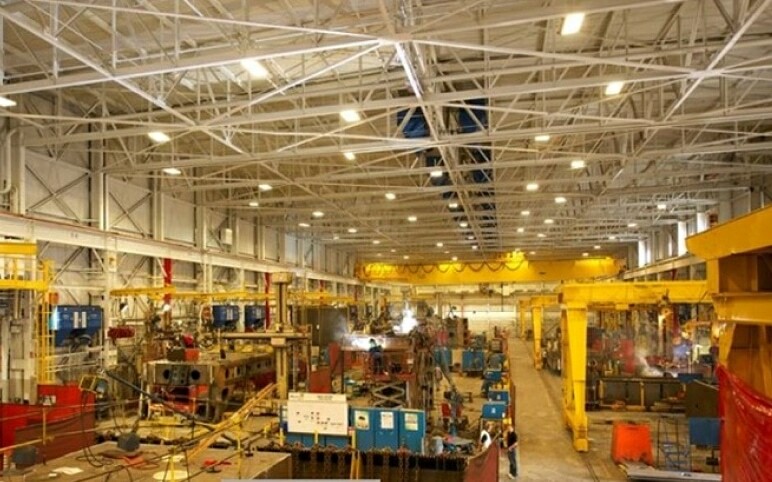
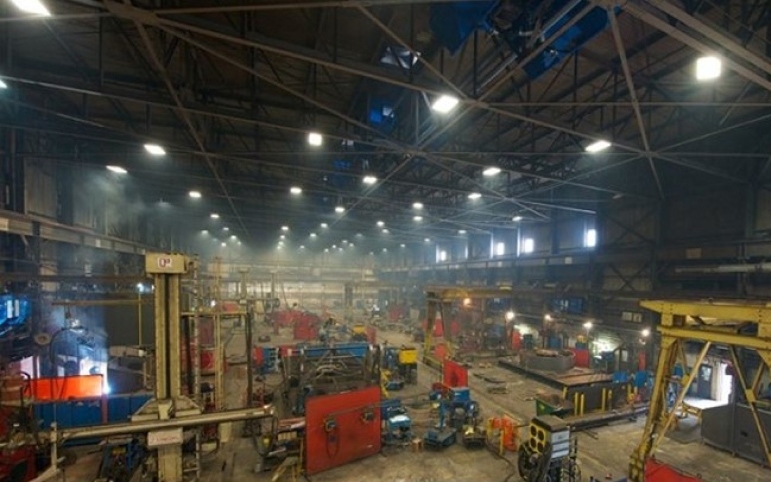




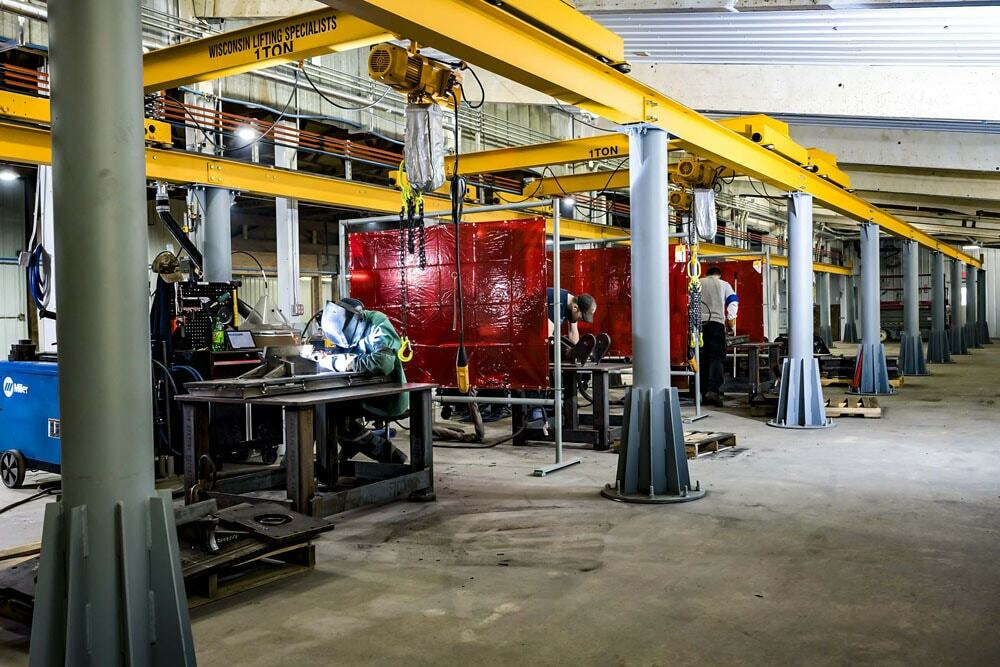
Finding the Right Welding Fume Extractor for Your Application
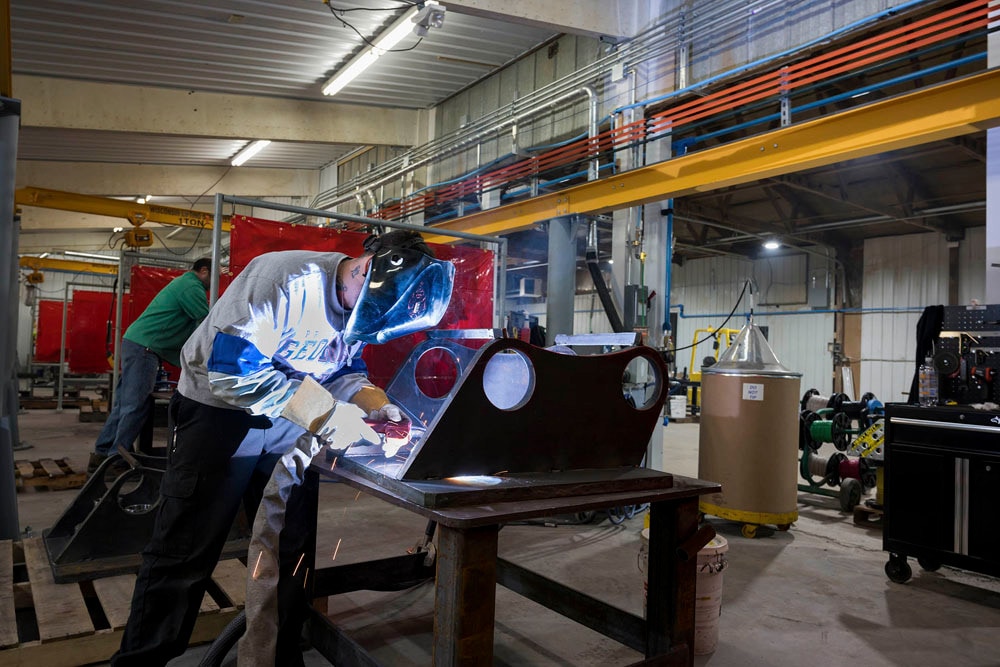
Choosing the right welding fume extractor starts with understanding how and where fume is generated in your facility. A robotic cell with a fixed weld path calls for a different solution than a manual welding station, where operators move between positions throughout the day. Below are the primary categories of welding fume extraction systems we offer.
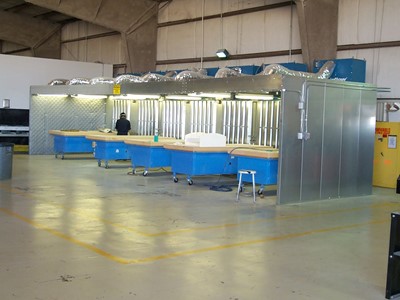
- Weld Fume Hoods and Enclosures are among the most effective options for both automated and manual welding applications. By enclosing or partially enclosing the weld area, these systems capture fume before it enters the broader shop environment. They are particularly well suited for fixed workstations and robotic welding cells.
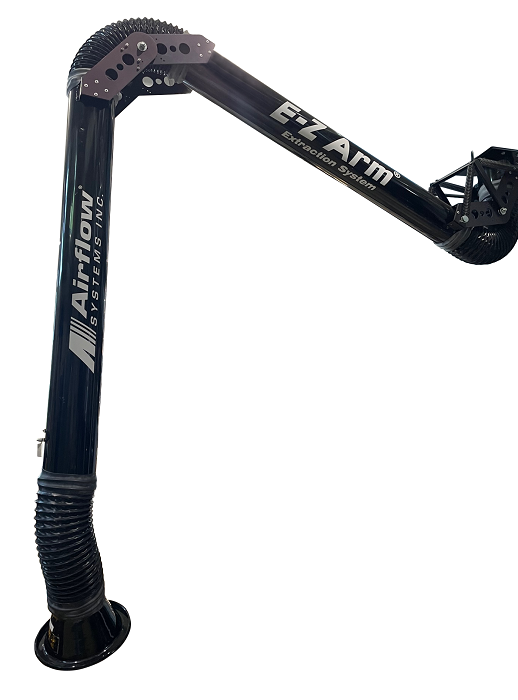
- Source Capture Extraction Arms provide a flexible, targeted approach to weld fume extraction. When positioned correctly near the arc, they capture contaminants at the point of origin. These arms are easy to deploy, reposition, and integrate into existing workstations, making them a go-to choice for shops with stationary or semi-stationary weld points.
- Robotic Ventilation Systems are purpose-built for automated welding lines. These welding fume extraction systems coordinate airflow with the movement of the robot, maintaining consistent capture rates throughout each weld cycle without slowing production.
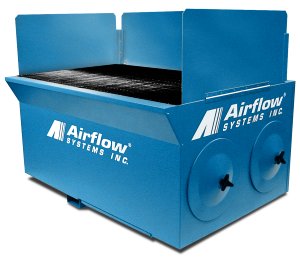
- Downdraft and Backdraft Systems work well for small- to medium-sized parts and are equally effective for grinding, deburring, and other metalworking tasks. Airflow is directed downward or rearward through the work surface, pulling fume away from the operator's breathing zone.
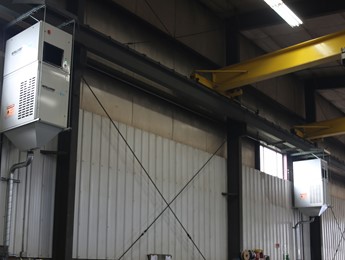
- Ambient Air Filtration Systems take a facility-wide approach. Rather than capturing fume at the source alone, these industrial welding fume collectors circulate and filter air across the entire plant. They are growing in popularity as a supplemental layer of protection, especially when paired with source capture equipment to ensure thorough air quality control.
- FumeVac High-Vacuum Source Capture Systems capture fume within inches of the arc using on-torch or near-torch extraction. This method delivers lower airflow rates, smaller filtration footprints, simpler ducting, and cleaner breathing zones compared to traditional methods. FumeVac systems serve both robotic and manual MIG welding operations and are becoming the preferred solution for fabricators focused on compliance and energy efficiency.
Engineered for Compliance, Built for Your Facility
Every industrial welding fume extraction system from Hastings Air is designed with regulatory compliance in mind, meeting or exceeding standards set by OSHA, ACGIH, NIOSH, NFPA, and the EPA. Our engineering team evaluates your facility layout, welding processes, production volume, and airflow requirements to recommend a welding fume extractor that fits your operation and your budget.
Whether you need a single welding fume extractor for a training lab or a multi-zone system across a large production floor, Hastings Air has the experience and product depth to deliver. Contact our team for a facility assessment, or request a quote to get started.
Frequently Asked Questions About Welding Fume Extraction Systems
Filter lifespan depends on your welding intensity, the materials being welded, and whether your system includes automatic pulse-cleaning. An industrial welding fume extractor with self-cleaning mechanisms typically extends filter life to 6 to 12 months under normal conditions. For operations without auto-cleaning, expect to inspect and replace filters every 2 to 5 months. Hastings Air can help you establish a preventive maintenance schedule based on your specific production environment.
Both options are viable, but each comes with regulatory considerations. If you recirculate cleaned air indoors, OSHA requires that contaminant levels remain below Permissible Exposure Limits (PELs) and that the system includes fail-safes in case of equipment malfunction. If you exhaust air outdoors, EPA emission standards under the National Emission Standards for Hazardous Air Pollutants (NESHAP) apply. Our engineering services team can evaluate which approach best fits your facility and compliance requirements.
Source capture systems, such as extraction arms, hoods, and on-torch extractors, remove fume directly at or near the welding arc before it enters the breathing zone. Ambient industrial welding fume collectors circulate and clean the air throughout the entire facility. Source capture is the preferred primary method because it controls exposure more effectively, but many facilities combine both approaches for comprehensive air quality management.
Yes. The type of system you need depends on the application. Robotic cells typically benefit from enclosed hoods or integrated welding fume extraction systems that coordinate with the robot's weld path. Manual welding stations are often best served by source capture extraction arms or high-vacuum on-torch systems like FumeVac, which allow operators to move freely while maintaining fume capture at the arc.
OSHA's Respiratory Protection standard (29 CFR 1910.134) and its ventilation requirements under 29 CFR 1910.252 and 1926.353 are the primary regulations governing welding fume exposure. These standards set Permissible Exposure Limits for specific metals found in weld fume, including manganese, hexavalent chromium, and nickel. Facilities without a compliant industrial welding fume extractor risk citations, fines, and increased scrutiny during future inspections. Visit our weld fume safety concerns page for a deeper look at current regulatory requirements.


